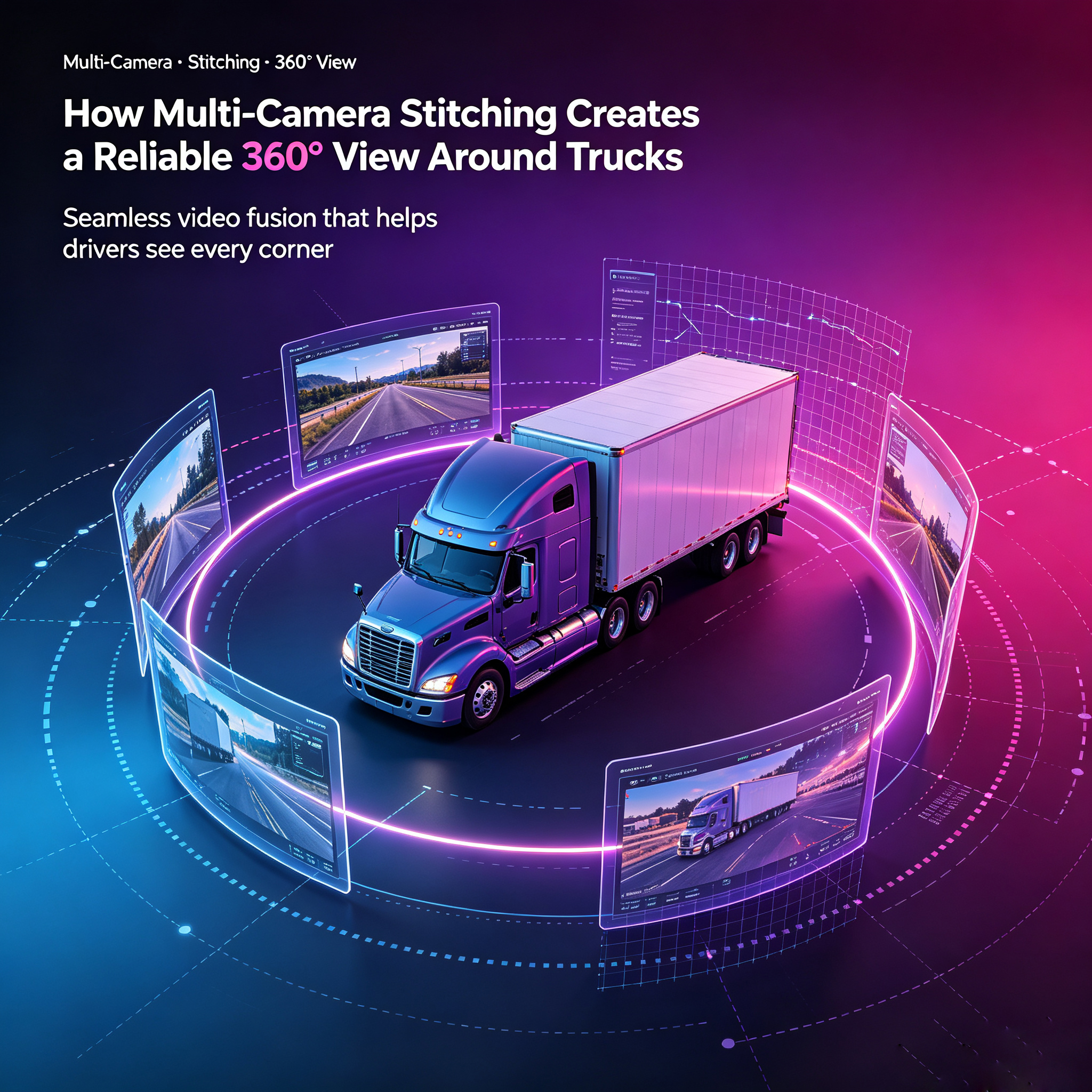
How Multi-Camera Stitching Creates a Reliable 360° View Around Trucks
This article explains how synchronized wide-angle cameras are transformed into a stable top-down view for trucks and buses. It covers overlap design, seam handling, latency control and validation methods that help fleets deliver a useful panoramic image rather than a distracting or misleading display.
The program combines 360° Bird View System, Heavy-duty Vehicle, Blind Spot Elimination, Image Stitching, Camera Calibration, Distortion Correction, Night Vision, Fleet Safety, Accident Avoidance, and Return on Investment as one operating model.
From Four Cameras to One View
Each camera captures a fisheye image with intentional overlap. Software projects those images onto a virtual ground plane, aligns common features and blends the seams. Good design prioritizes spatial truth near the vehicle over a visually dramatic but inaccurate panorama.
Engineering for Stability
Stable output requires synchronized frames, predictable latency, exposure balancing and seam placement away from high-risk zones. Algorithms should resist sudden brightness changes and preserve the shape of pedestrians, curbs, pallets and nearby vehicles.
Validation in Real Operations
Validation should use marked distances around the truck, repeatable turning tests, trailer or body configurations and real yard conditions. Drivers should confirm whether objects appear in the expected position and whether the view remains understandable under motion.
Implementation Checklist
Define image-overlap targets, test latency, document seam zones, verify object position and retrain after software changes. Treat the final panoramic image as a safety instrument that must remain spatially consistent.
For governance, teams should review 360° Bird View System, Heavy-duty Vehicle, Blind Spot Elimination, Image Stitching, Camera Calibration, Distortion Correction, Night Vision, Fleet Safety, Accident Avoidance, and Return on Investment together rather than as isolated features.
Next topic: calibration accuracy